
04 · Complex business application
MeepleCrate: Rental & Delivery PlatformRentals are not e-commerce. So the back office had to be built, not bought.
A board-game rental and delivery platform serving Colorado and neighboring states: a credit-based subscription storefront on top of a twelve-module operations back office for catalog, physical inventory, service areas, bookings and credits.
- Client
- MeepleCrate
- Year
- 2024–25
- Status
- Live in production
- Role
- Full-stack engineer
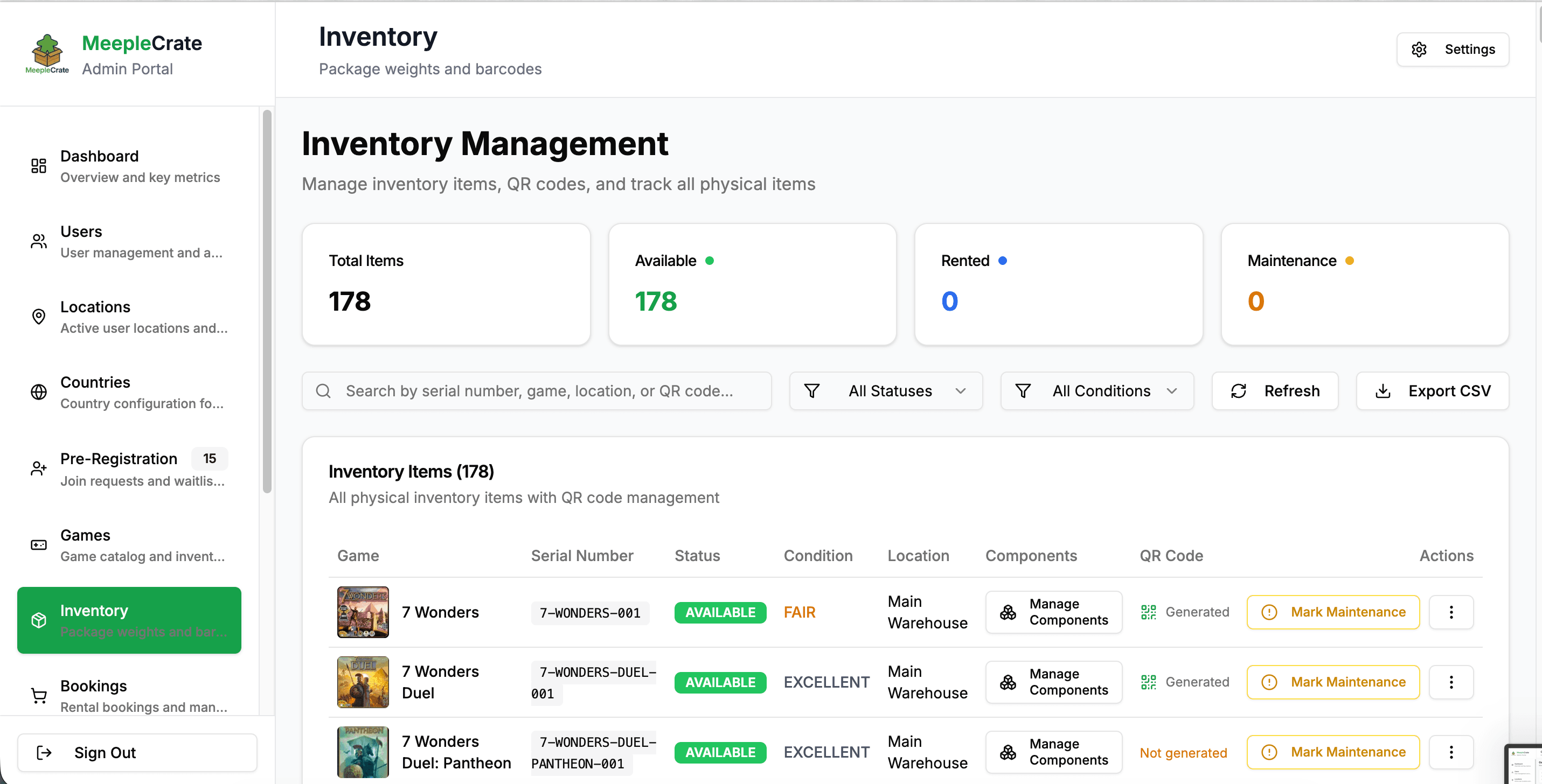
- 1Twelve-module operations sidebar
- 2Live stock: total, available, rented, maintenance
- 3Every copy tracked by serial and condition
- 4Generated QR code per copy
- Operations modules in the admin portal
- 12
- Titles synced into catalog & inventory
- 178
- Credit tiers mapped to box size
- 5
01Problem
A rental business has problems a storefront never models: physical copies that leave and come back, deliveries limited to specific ZIP codes, a credit economy tied to game size, and a catalog of hundreds of titles whose metadata nobody wants to type by hand.
Off-the-shelf e-commerce and subscription tools could take payments, but none of them could track a specific copy of a specific game through delivery, play and return.
02My role
Full-stack engineer, customer site, admin portal, APIs
- Customer storefront, plans and onboarding
- Backend APIs and business rules
- BoardGameGeek and Stripe integrations
- Location and service-area logic
- Admin portal and cloud deployment
03System architecture
A public storefront and an operations portal share one API. Integrations handle the parts nobody should do by hand: catalog metadata, payments and service-area checks.
01 Acquire
Customer site
- Plans & credits
- Waitlist / pre-registration
- Game & city voting
02 Decide
API & business rules
- Auth & subscriptions
- Credit ledger
- Bookings & returns
03 Integrate
External systems
- BoardGameGeek sync
- Stripe payments
- ZIP-code service areas
04 Operate
Admin portal
- Inventory + QR codes
- Bookings & credits
- CMS & settings
Across every stage
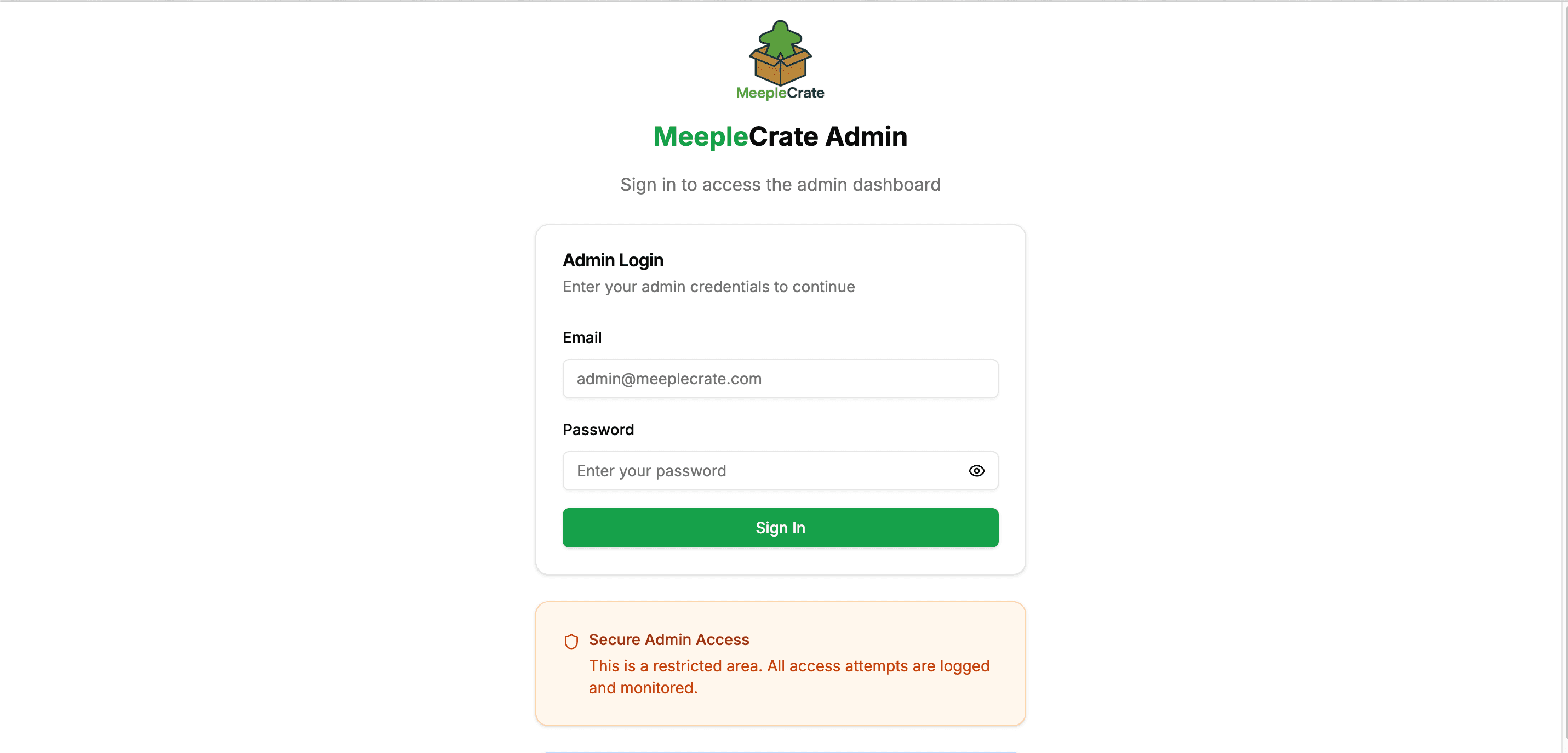
- Restricted admin access with logging
- Maintenance & debug modes
- Cloud deployment
04Implementation
04.1
Catalog sync, not data entry
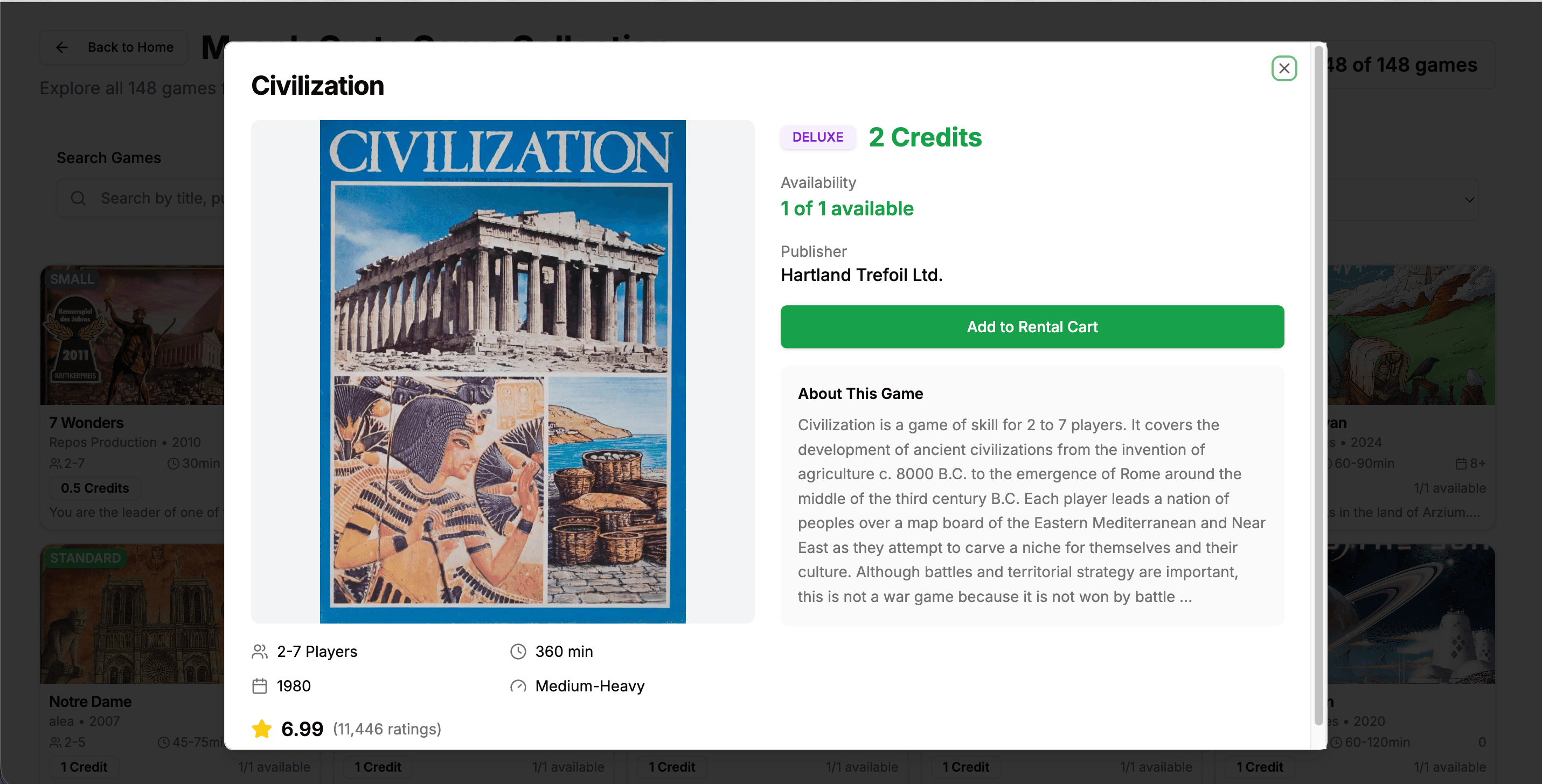
Titles are pulled from the BoardGameGeek API with players, play time, weight and ratings attached. Admins sync from BGG in one action, and customers requesting a new game search BGG directly from the vote form.
04.2
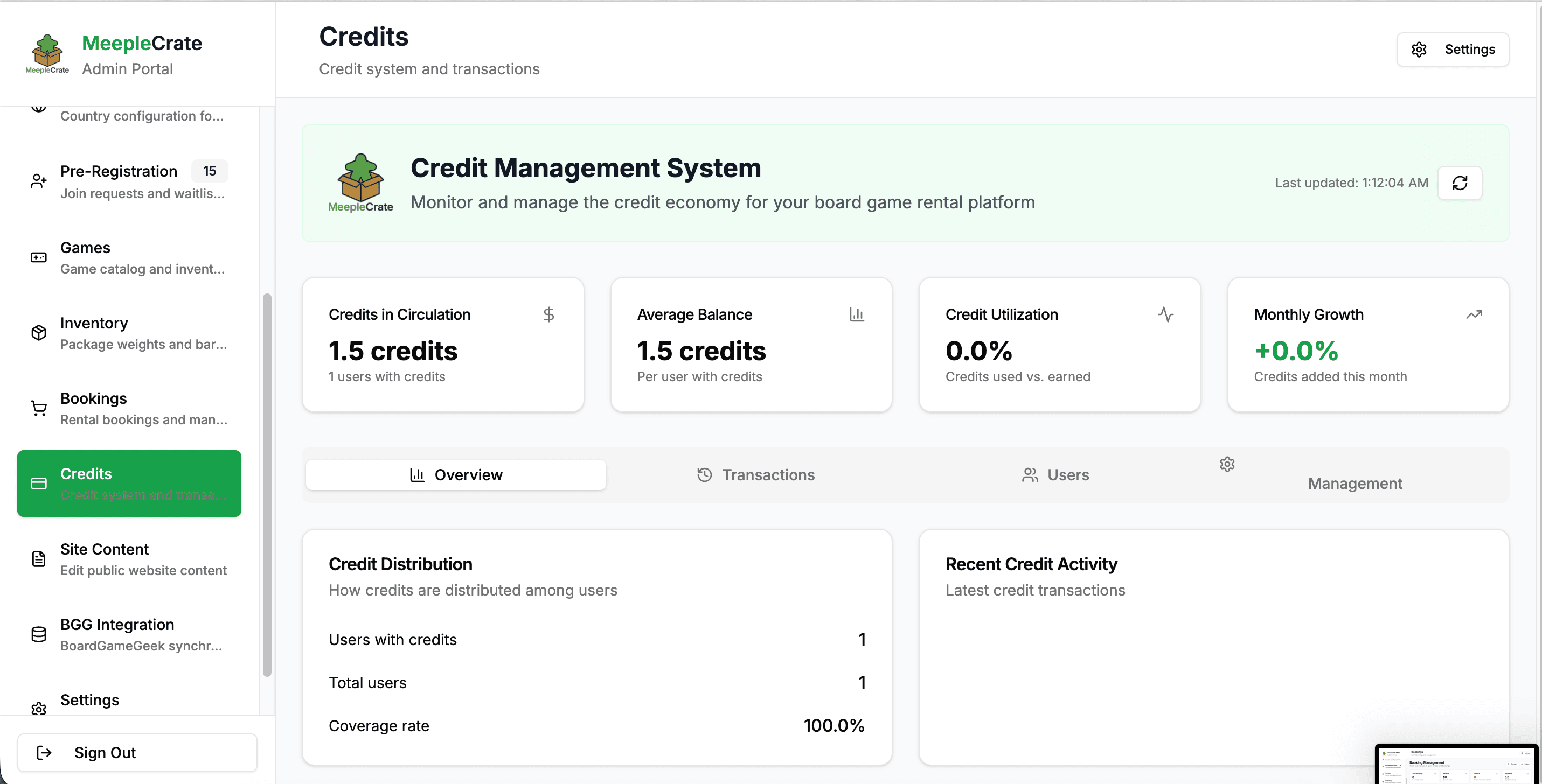
A credit economy with a ledger
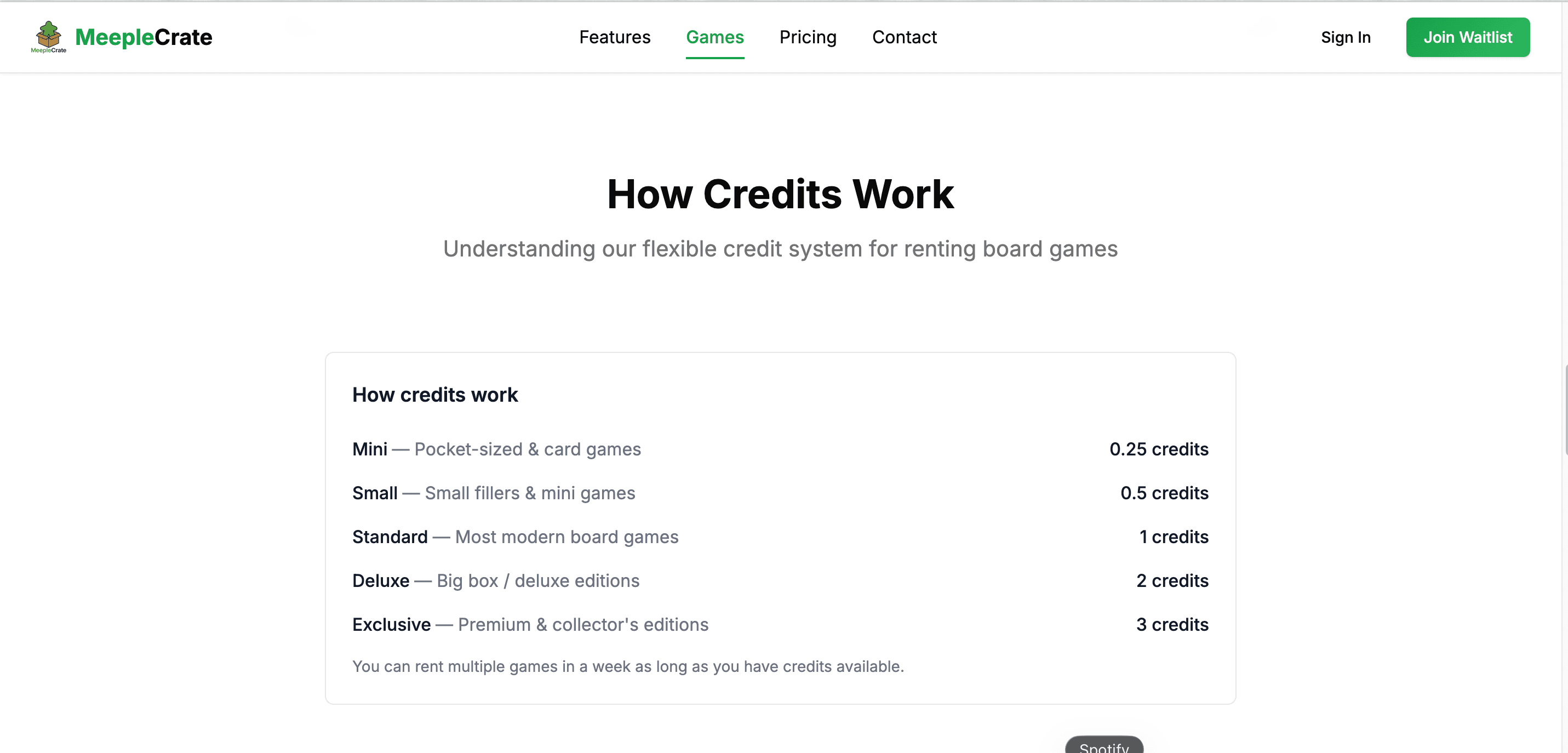
Five tiers by box size, from Mini at 0.25 up to Exclusive at 3 credits, sit underneath monthly plans of 2, 3 or 5 credits. A dedicated credits module tracks circulation, balances and transactions.
04.3
Every physical copy is an entity
Each copy carries a serial number, condition grade, warehouse location, component check and maintenance flag, with a generated QR code for scanning at pick, pack and return.
04.4
Service areas and demand-led expansion
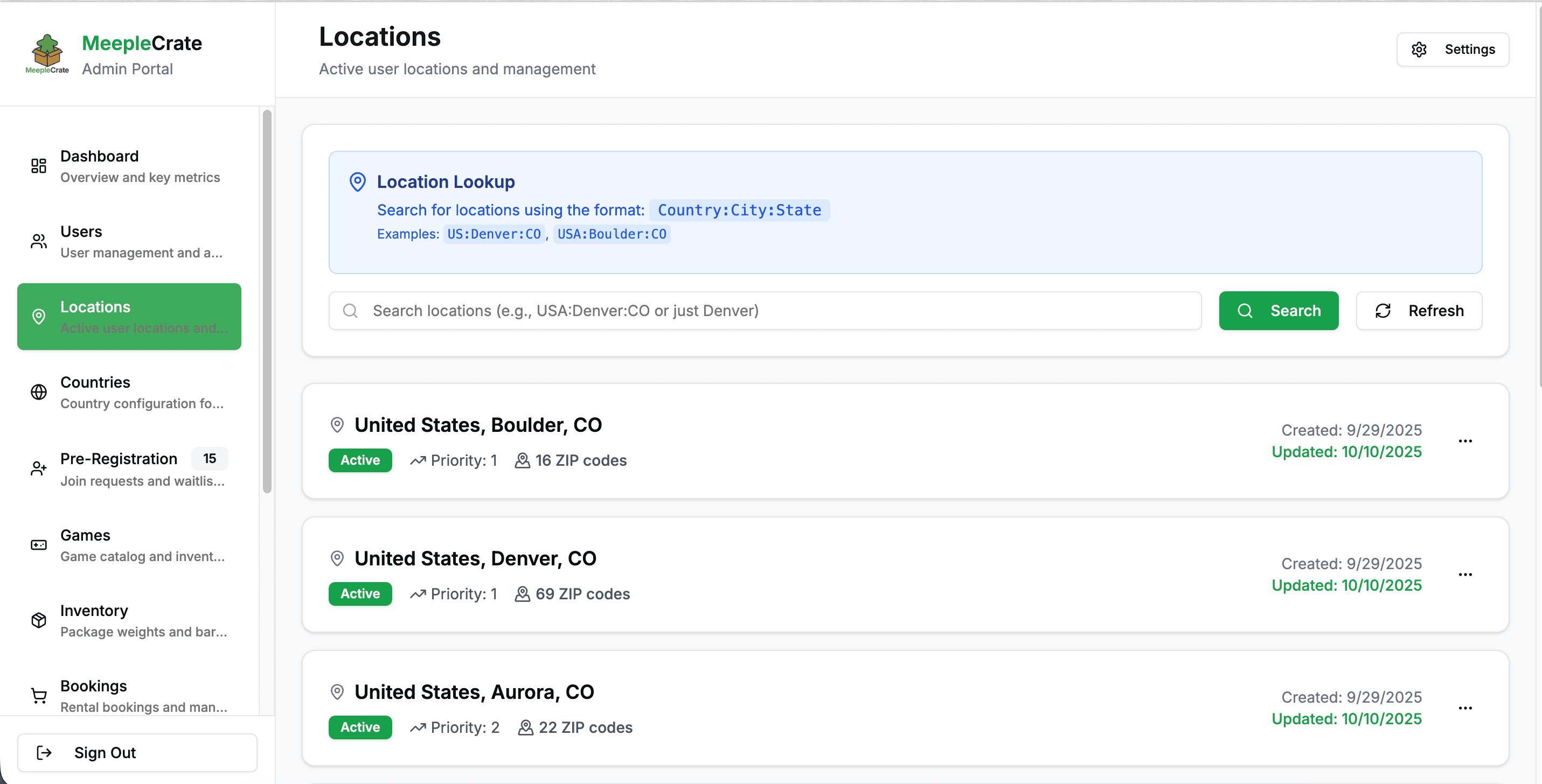
Locations are modelled by city and state with ZIP-code coverage and priority: Boulder, Denver, Aurora. City and game requests from the public site feed a pre-registration pipeline that drives where the service goes next.
04.5
Operators control the product
A content module edits the hero, features, pricing, credit tiers and testimonials without a deploy. System settings expose maintenance and debug modes, and admin sign-in is restricted and logged.
05Outcome
- Live in production, serving Colorado and neighboring states with weekly Monday deliveries
- One back office covering catalog, physical inventory, service areas, bookings and credits
- Catalog maintained through BoardGameGeek sync instead of manual entry
- Expansion decisions driven by in-app city and game voting
- Java Spring Boot
- Laravel
- Next.js
- TypeScript
- PostgreSQL
- Stripe
- BoardGameGeek API
- AWS
06Screens
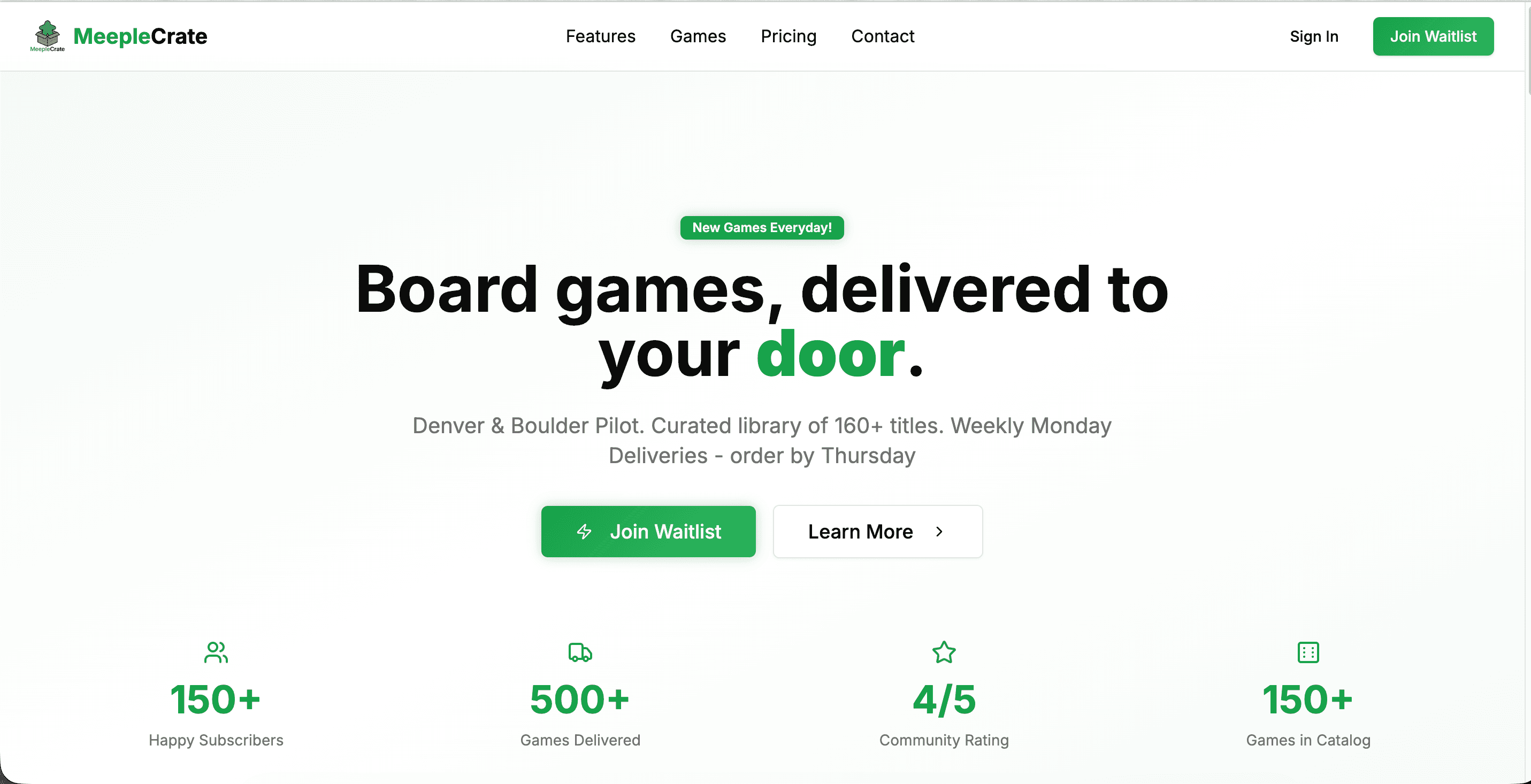
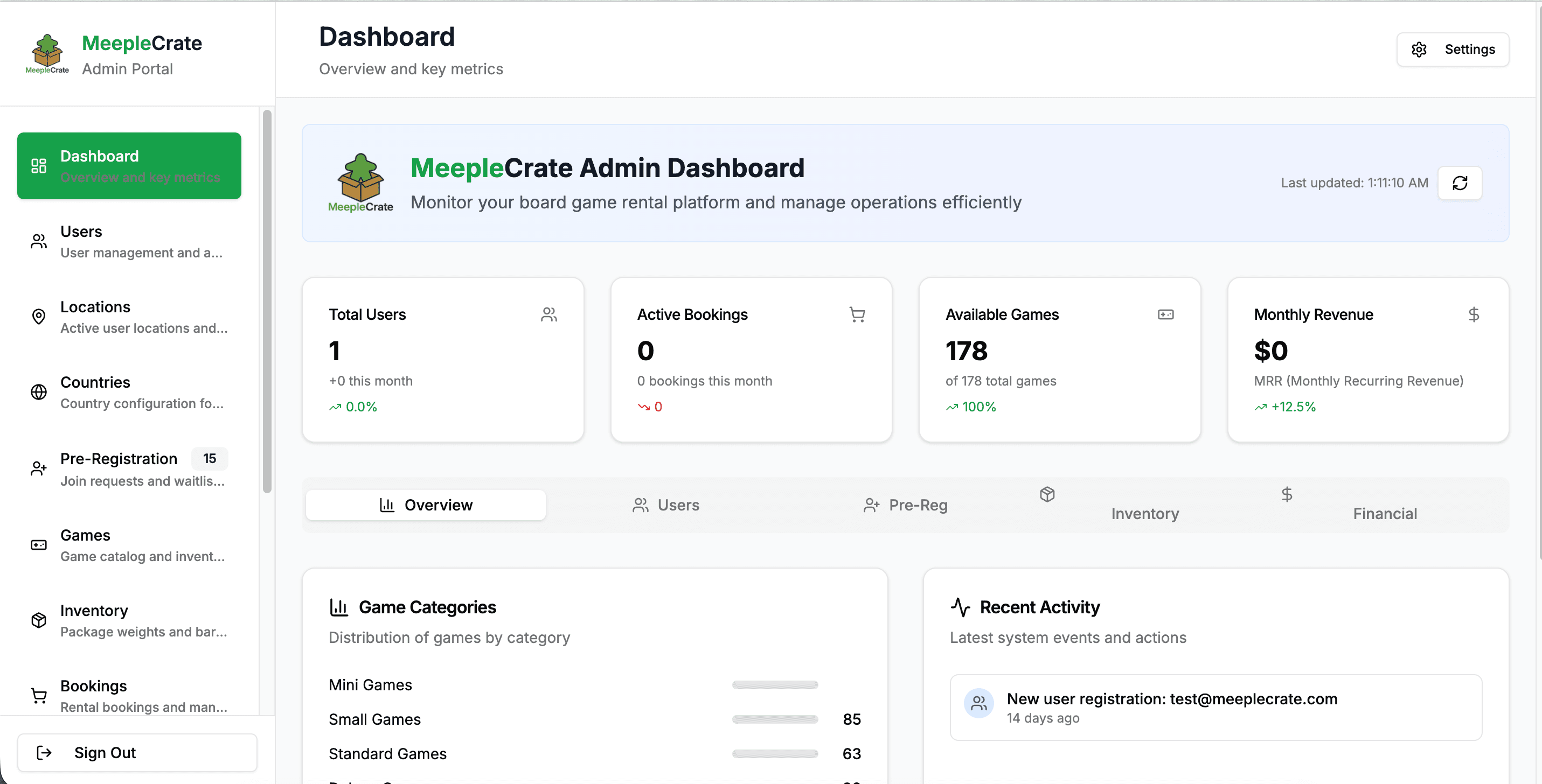
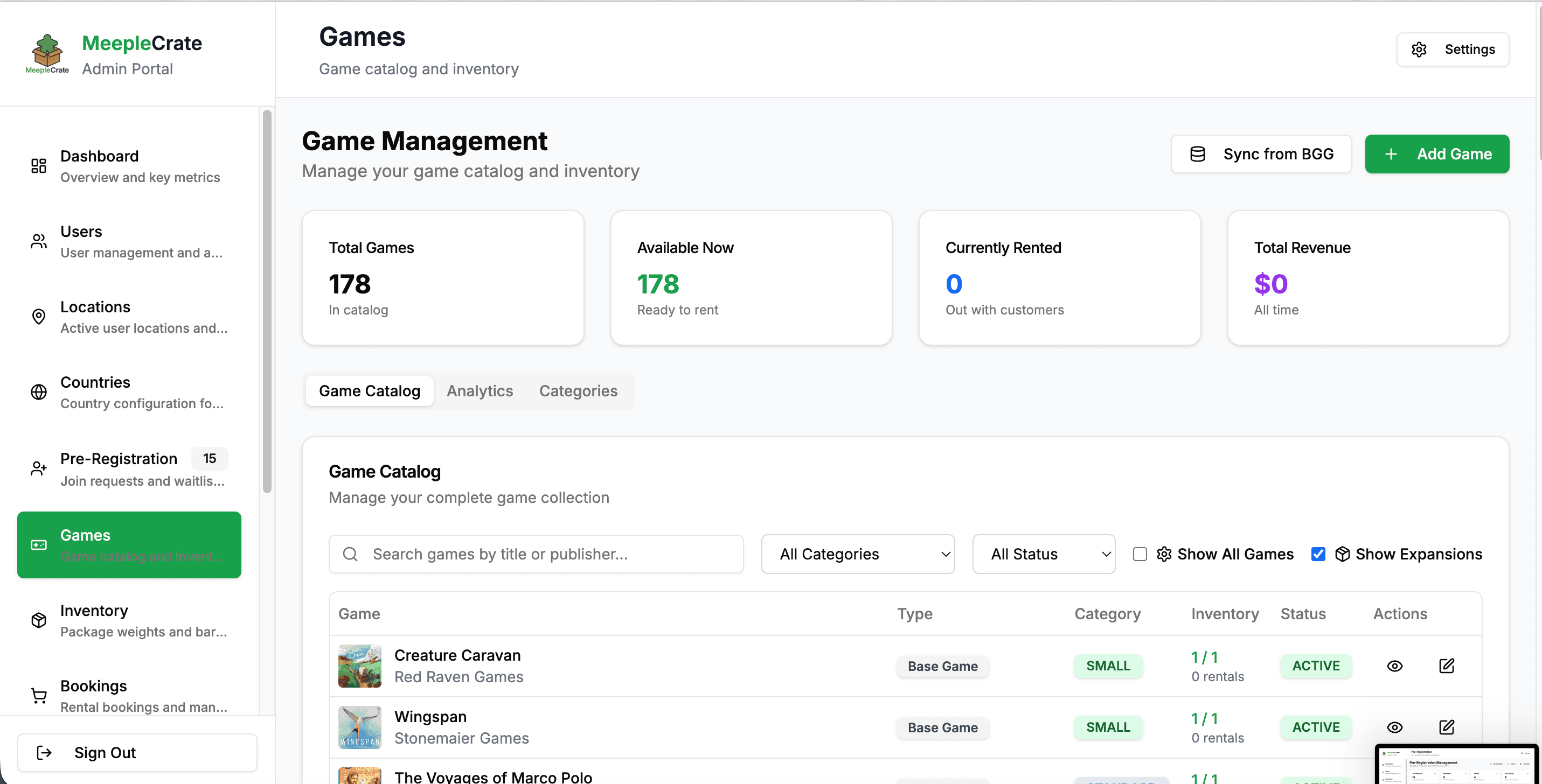
Next step
Have an application that needs building?
Tell me about the workflow that's slowing you down, the systems you need connected, or the application you want to build. We'll work out the right approach.